

Below is a reflection on the Gospel reading for Sunday, March 1st, in the Roman Catholic tradition.
Jesus took Peter, James, and John his brother, and led them up a high mountain by themselves. And he was transfigured before them; his face shone like the sun and his clothes became white as light. And behold, Moses and Elijah appeared to them, conversing with him. Then Peter said to Jesus in reply, “Lord, it is good that we are here. If you wish, I will make three tents here, one for you, one for Moses, and one for Elijah.” While he was still speaking, behold, a bright cloud cast a shadow over them, then from the cloud came a voice that said, “This is my beloved Son, with whom I am well pleased; listen to him.” When the disciples heard this, they fell prostrate and were very much afraid. But Jesus came and touched them, saying, “Rise, and do not be afraid.” And when the disciples raised their eyes, they saw no one else but Jesus alone.
As they were coming down from the mountain, Jesus charged them, “Do not tell the vision to anyone until the Son of Man has been raised from the dead.” —Matthew 17:1–9
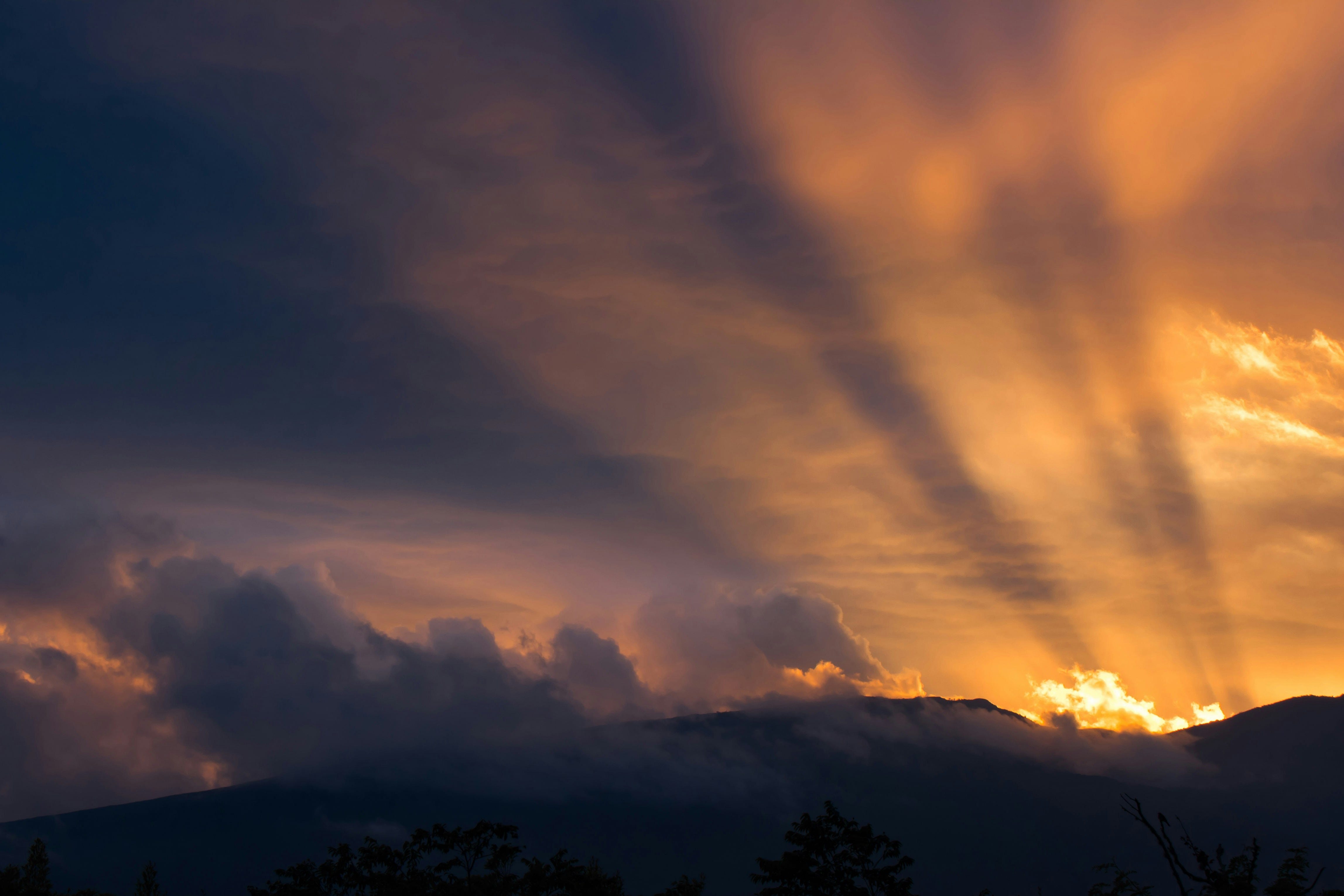
There’s a brightness that enters like a verdict, and stands there until the fragile architecture of our self-sufficiency begins to split. Under it, disguises liquefy. What we called strength trembles with evasion. The light doesn’t decorate our lives, it exposes their destiny. And because we aren’t made for such nakedness, the exposure feels like violence. Yet the wound it opens is the only place healing can begin. On a mountain history would never forget, that brightness pressed through the flesh of Christ as though his humanity were a veil too thin to contain eternity.
Six days after Peter named him Messiah, and six days after Jesus answered with the prophecy of nails and rejection, He led Peter, James, and John upward. They climbed because He did. The air thinned. The silence thickened. And then the familiar face, lined by fatigue and marked by love, began to blaze with an uncreated fire. His garments flared with a light no sun had cast. Nothing dissolved. Matter didn’t vanish, it yielded its secret. His humanity didn’t retreat before divinity, it became transparent to it. Being itself pulsed within the finite, and the disciples felt reality tilt beneath their feet.
Moses stood there. Elijah stood there. Law and Prophets bent toward fulfillment. The long ache of Israel… exile, blood, promise… converged upon this man from Nazareth. Peter, overwhelmed by coherence, reached for permanence. Three tents. A way to keep glory from slipping away. He didn’t yet know that revelation resists preservation, that the living God refuses to become a monument.
Before his words had settled, a cloud descended and swallowed the symmetry. From within it came the voice that would echo through every future darkness: “This is my beloved Son. Listen to him.” Not admire, listen. The command turned them from spectacle to obedience. For what the Son would speak of next was not radiance but execution. The belovedness proclaimed in light already contained the Cross.
They fell on their faces. Not as slaves before a tyrant but as men who sensed that Divine love isn’t safe. To behold such glory was to be implicated in it. Sonship wouldn’t remain spectacle, it would become participation. The radiance carried within it Gethsemane. To follow him would mean descending where he descended.
When they lifted their eyes, Moses was gone. Elijah was gone. The cloud thinned into ordinary air. Revelation contracted to a single presence. There was only Jesus, dust on his sandals, mortality written along his body. The same Jesus who would sweat blood while they slept. The vision resolved into subtraction. And in that subtraction lay its truth.
Without Calvary, Tabor would harden into triumphalism. A shining Christ who never bleeds. We would have preached brightness without cost and offered the world a distant, undemanding god. So Christ commands silence. “Tell no one the vision.” Had they spoken then, they would have spoken falsely: before the garden, before the nails, before the cry of dereliction. Words uttered too soon become idols.
St. John of the Cross would later learn what the mountain implied: illumination isn’t union. God grants sweetness, then withdraws it. Not as cruelty, but as purification. The soul must learn to love the God it cannot feel. Tabor belongs to light. Gethsemane belongs to night. Calvary belongs to union.
The disciples entered night at the moment of radiance. Illumination was provision, not residence. An ember pressed into trembling hands for darker hours. The Word doesn’t remain at altitude. He descends into betrayal, into silence before Pilate, into abandonment. Love refuses distance, and descends further than sight can follow.
“When they lifted up their eyes, they saw no one but Jesus himself.” No cloud. No blaze. Only Jesus. The one who would kneel with a basin. The one who would hang in disgrace. The descent into silence isn’t the loss of God but the death of every false image we have made of him. What remains is presence stripped of ornament, demanding trust.
They carried the memory of light like a wound. When noon darkened and their Teacher sagged beneath iron, the recollection must have torn at them: This is the Beloved. This is the One who shone. Only in resurrection did they understand. They had seen glory so that when glory hid itself, they wouldn’t mistake concealment for defeat. They had heard the voice so that when silence fell, they wouldn’t mistake it for abandonment.
The Transfiguration was never escape. It was promise hidden within catastrophe. The light schooled them for night. The silence revealed that he is enough. And when we lift our own eyes after prayer collapses into quiet, after the call that divides life into before and after, we too will see no one but Jesus himself. No spectacle. Only Him, the Incarnate One who doesn’t retreat from our darkness but inhabits it.
The rest is silence. Yet the silence isn’t empty. It burns with a brightness too fierce for comfort, too faithful to fail. It burns with Him.
The line that stopped me: “illumination isn’t union.” I’ve been sitting with that distinction for two months now, since an experience on New Year’s Day that divided my life cleanly into before and after. I won’t say more than that. But your reading of Tabor as provision rather than residence — as an ember pressed into trembling hands for darker hours — is the most precise description I’ve encountered of what that kind of light actually does to you. It doesn’t install itself. It equips you and then withdraws, and what remains is the question of whether you trust what you saw.
What strikes me about Peter’s three tents is that it’s not foolishness, it’s the completely rational response of someone trying to protect a real thing. We all do it. The mistake isn’t the impulse, it’s not yet knowing that glory can’t be curated.
Your closing movement — “the silence isn’t empty, it burns with Him” — is where this lands for me. The descent into silence after the light isn’t loss. But you have to have seen the light first to know that. Otherwise silence is just silence.
Thank you for this.
Brilliant! I was just reading this Gospel in preparation for our Devotional Service here in Southeast Wisconsin.
I recall how Rudolf Steiner equates Elijah with ‘the Way’, Moses with ‘the Truth’ & Jesus as ‘the Life’ –
We receive this potent saying: “I am the way and the truth and the life. No one comes to the Father except through me”- from the Gospel of John, which interestingly doesn’t speak directly of the Transfiguration – giving us instead the direct result of the Transfiguration - a prefiguring of the Resurrection - & in our time now the appearance of the Etheric Christ.
Thank you for this enlightening reading